Tests for code you never tested
Repeval tests your app inside your own GitHub Actions: it reads your code there, writes the tests, runs them and hands back a screenshot of every page. Your code never comes to us, and we keep no database.
- Free and open source
- No database, nothing stored
- No AI required
A run of the demo shop: GitHub sets up a sandbox, then Repeval reads 2 source files, finds 5 pages and 3 API endpoints in them, plans 6 tests, writes 2 test files, runs them and finds a possible bug on /cart, then saves screenshots and a report.
Works with
- JavaScript
- TypeScript
- Node.js
- Vitest
- Playwright
- Next.js
- Vite
- React
- Express
- Fastify
- Hono
- NestJS
- SvelteKit
- Remix
- React Router
- GitHub Actions
Six steps, nothing hidden
Every run goes through the same six steps on a fresh GitHub machine. You can watch each one happen, and every result is explained in plain words.
- Sandbox
GitHub sets up a fresh, temporary machine and copies your repo there. Repeval itself never receives your code.
The machine is deleted when the run ends.
- Analyze
Reads your files for your stack, every exported function, every page and API endpoint, and how to start the app.
Next.js, Vite, Express, NestJS, Fastify, Hono, SvelteKit, Remix, React Router. Skips
node_modules, build output and binaries. - Plan
Decides what to test. Anything it can't test yet is listed with the reason, never silently dropped.
Example: "/products/:id needs example IDs".
- Make tests
Writes real test files: Vitest for your functions, Playwright for your pages and API.
Your own files are never changed.
- Run
Starts your app, opens every page in a real browser and takes a screenshot at desktop and phone width.
Possible bugs are reported, never hidden by weakening a test.
- Results
Hands back a report with every test, every screenshot and the test files to keep.
Saved in your repo for 7 days, then deleted.
Proof you can open
This is a real run on the demo shop from the examples folder. Every page was opened in a browser, and one of them had a bug nobody had noticed.

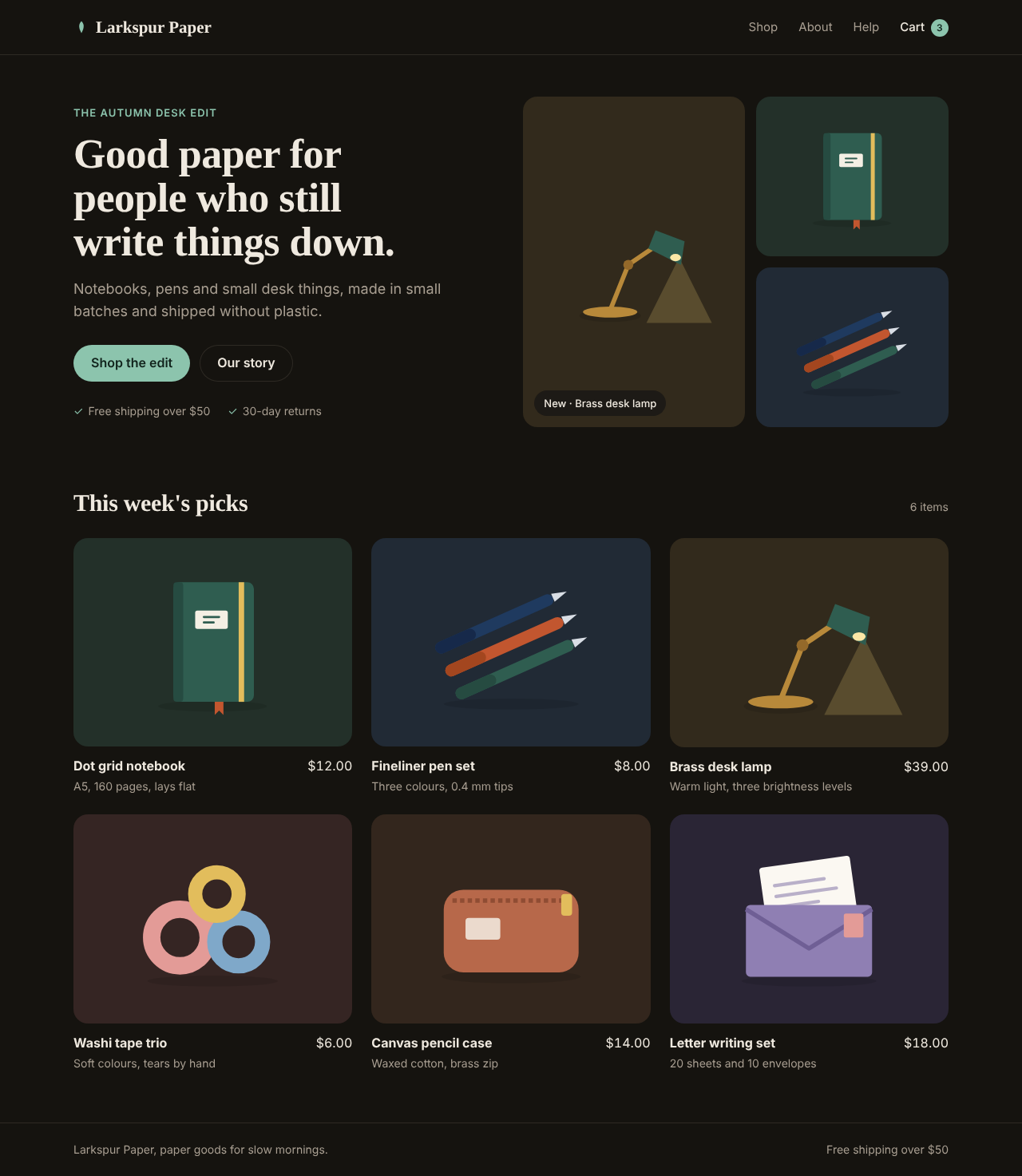


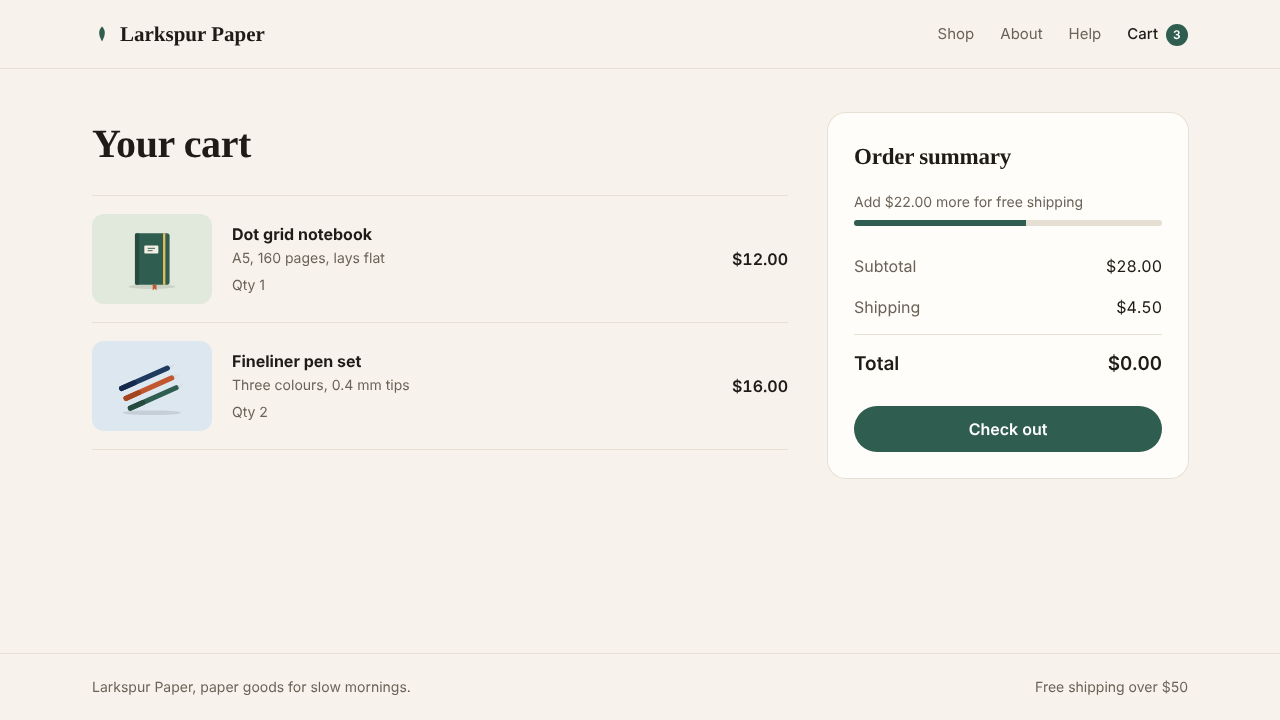
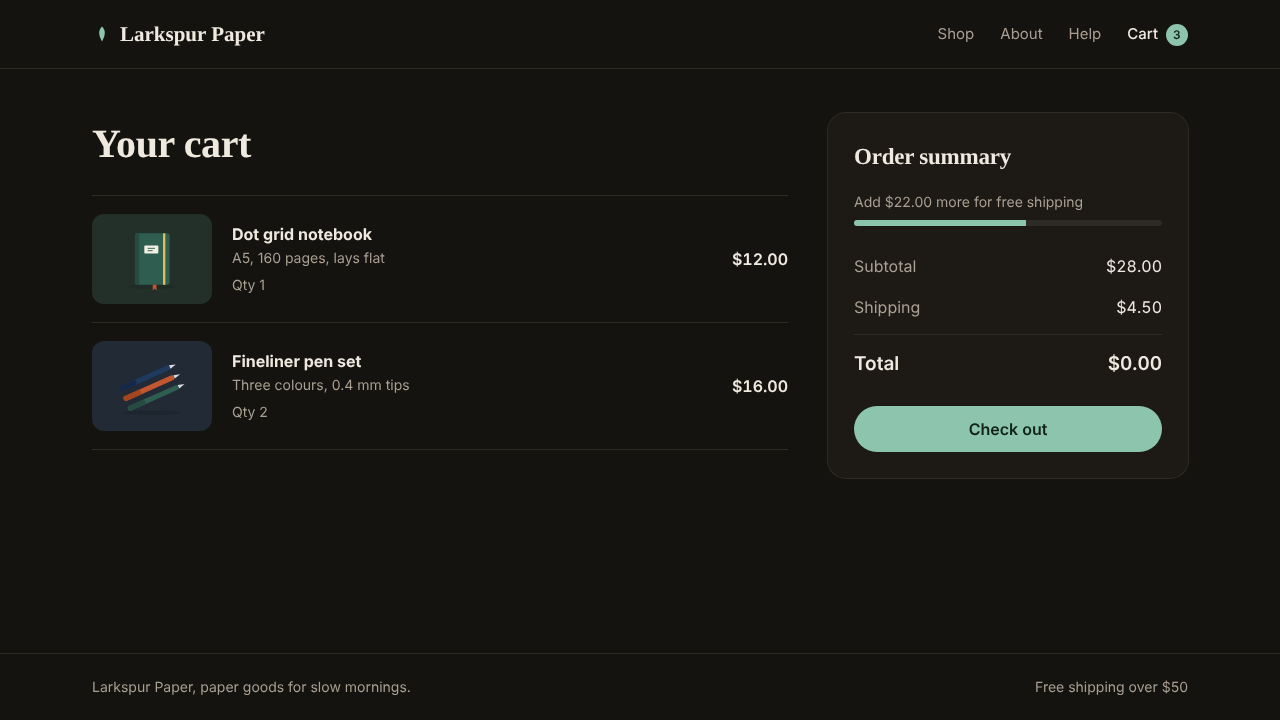
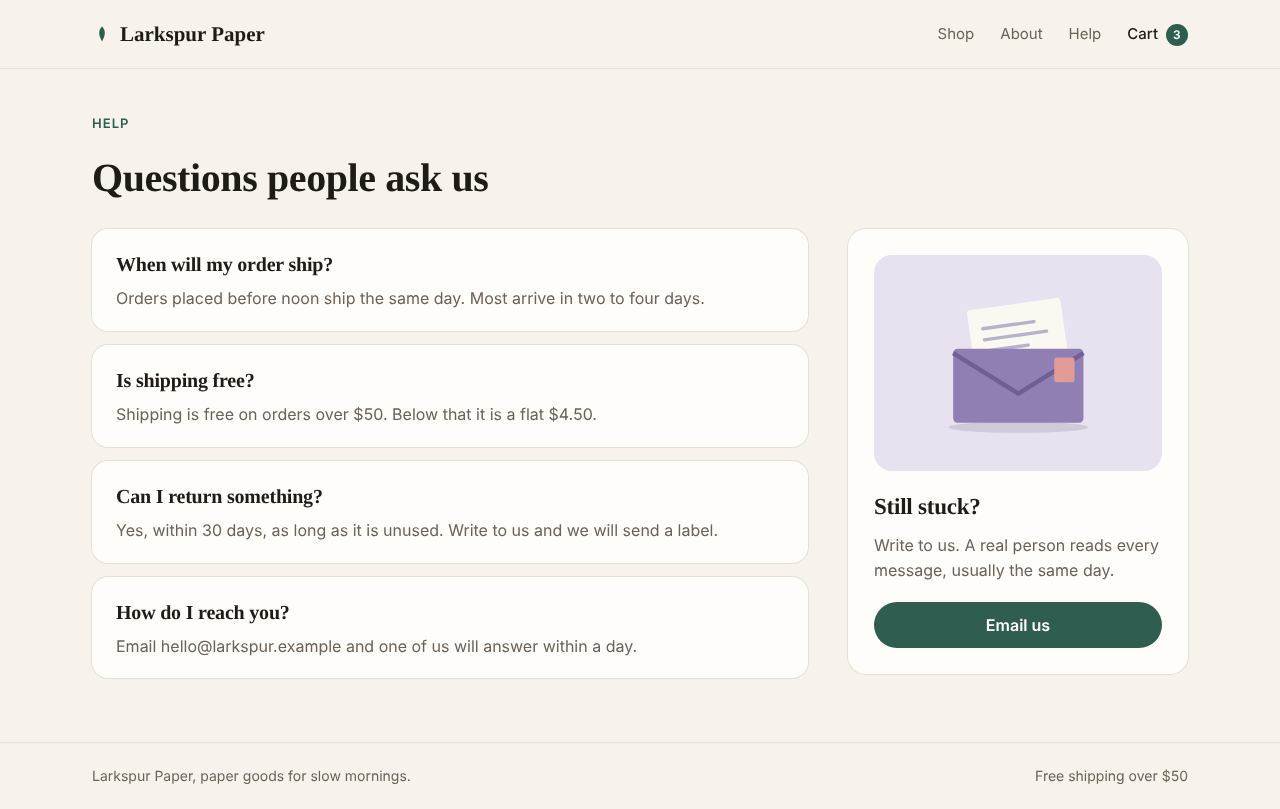
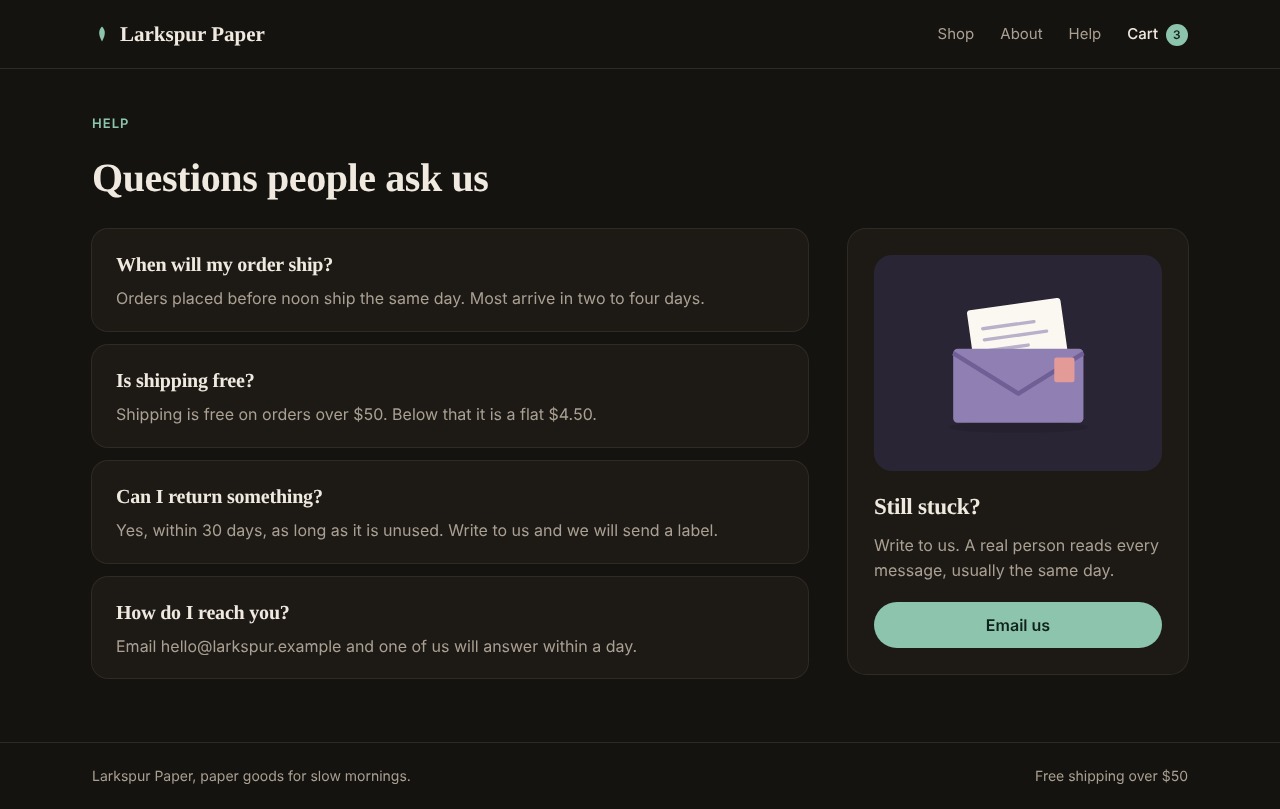
The cart page throws an error in the browser
The page loads, but its script uses cartTotal, which doesn't exist, so the total never updates. Visitors see a $28.00 subtotal and a $0.00 total.
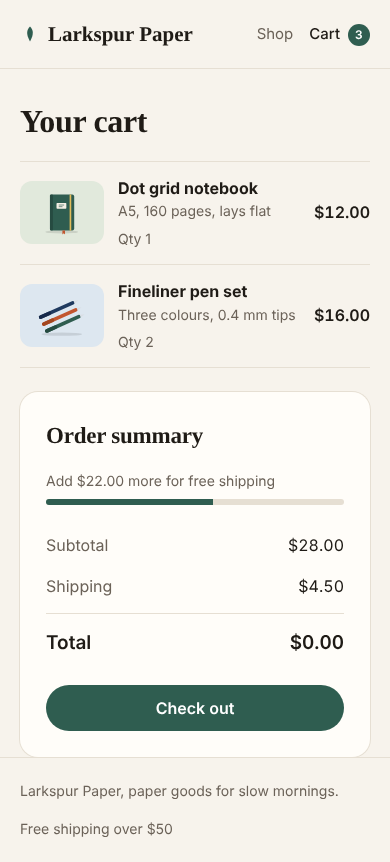
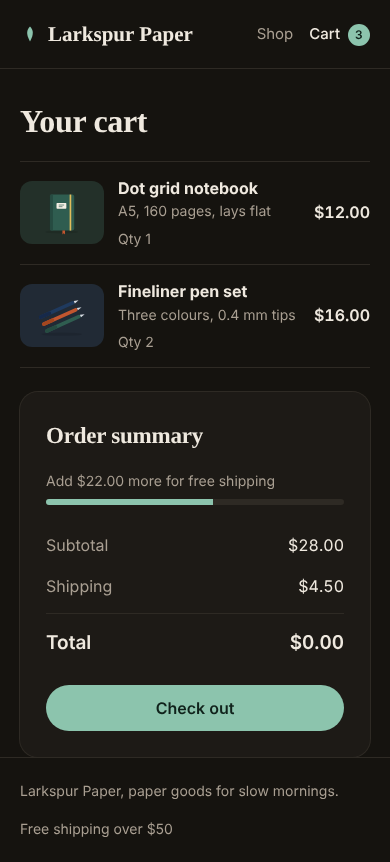
Tests you can keep
Every test Repeval writes is a normal file. Press Commit to a branch to send them all to your repo as a pull request, or download them. Once merged, they keep checking your app on every change.
// Smoke test for every page: it loads, shows content, has no browser errors.
import { expect, test } from '@playwright/test';
import { openPage } from './_repeval';

test("page /cart loads", async ({ page }) => {
  const { response, errors, screenshot } =
    await openPage(page, "/cart", "cart");
  await screenshot('desktop');
  await page.setViewportSize({ width: 390, height: 844 });
  await screenshot('mobile');

  expect(response?.status() ?? 0, 'HTTP status').toBeLessThan(400);
  expect(errors, 'browser errors on this page').toEqual([]);
});
// Checks that each simple GET endpoint answers without a server error.
import { expect, test } from '@playwright/test';

test("GET /api/products responds", async ({ request }) => {
  const res = await request.get("/api/products");
  expect(res.status(), 'HTTP status (5xx means the server failed)')
    .toBeLessThan(500);
});

test("GET /api/health responds", async ({ request }) => {
  const res = await request.get("/api/health");
  expect(res.status(), 'HTTP status (5xx means the server failed)')
    .toBeLessThan(500);
});
A second opinion, not a replacement
Keep the tools you already use. Repeval is a free, open-source second look at your code. Run it alongside your current tests and see what it finds.
| Repeval | AI test agents | AI unit test generators | Hosted testing services | |
|---|---|---|---|---|
| Price | Free, open source (MIT) | Free tool, you pay for the AI | Free tier, then paid | Paid plans |
| Works without AI or an API key | Yes | No | No | Varies |
| Unit tests (functions) | Yes | No | Yes | No |
| Page and API tests | Yes | Yes | No | Yes |
| Screenshot of every page | Yes | Optional | No | Yes |
| Where your code runs | Your own GitHub Actions | Your machine | Your machine or CI | Their cloud |
| Tests you keep as code | YesVitest, Playwright | Yes | Yes | Often no |
| Real user flows (sign in → checkout) | Coming with AI mode | Yes | No | Yes |
Repeval
- Price
- Free, open source (MIT)
- Works without AI or an API key
- Yes
- Unit tests (functions)
- Yes
- Page and API tests
- Yes
- Screenshot of every page
- Yes
- Where your code runs
- Your own GitHub Actions
- Tests you keep as code
- YesVitest, Playwright
- Real user flows (sign in → checkout)
- Coming with AI mode
AI test agents
- Price
- Free tool, you pay for the AI
- Works without AI or an API key
- No
- Unit tests (functions)
- No
- Page and API tests
- Yes
- Screenshot of every page
- Optional
- Where your code runs
- Your machine
- Tests you keep as code
- Yes
- Real user flows (sign in → checkout)
- Yes
AI unit test generators
- Price
- Free tier, then paid
- Works without AI or an API key
- No
- Unit tests (functions)
- Yes
- Page and API tests
- No
- Screenshot of every page
- No
- Where your code runs
- Your machine or CI
- Tests you keep as code
- Yes
- Real user flows (sign in → checkout)
- No
Hosted testing services
- Price
- Paid plans
- Works without AI or an API key
- Varies
- Unit tests (functions)
- No
- Page and API tests
- Yes
- Screenshot of every page
- Yes
- Where your code runs
- Their cloud
- Tests you keep as code
- Often no
- Real user flows (sign in → checkout)
- Yes
The tools in these categories are built by talented people, and many do things Repeval doesn't yet. Repeval is a small open-source project made by one developer. It isn't trying to be the best or to replace them: it's a free alternative and a second opinion, so anyone can test their code at no cost.
Your code stays in GitHub
Runs happen inside your own repo's GitHub Actions. The website starts them and shows the results. It has no database and no permission to read your code.
Who can see my code?
Only GitHub. The tests run on a temporary machine in your own GitHub account, which is deleted when the run ends. The Repeval website only sees your repo names and the run's results, and it doesn't keep those either. Sign out and nothing about you remains.
Repeval can
- See the names of repos you allow
- Start the Repeval workflow when you press Run
- Read that run's progress and report
Repeval can't
- Read your source code
- Push commits, edit files or open pull requests
- See your secrets, like an AI key
- Keep anything after you sign out
# .github/workflows/repeval.yml (you add this file yourself)
on:
  workflow_dispatch:        # runs only when you start it
permissions:
  contents: read             # can read, never write
jobs:
  repeval:
    runs-on: ubuntu-latest   # a fresh machine, deleted after
    steps:
      - run: npx --yes repeval@0.1 analyze
      - run: npx --yes repeval@0.1 test
      - uses: actions/upload-artifact@v4   # report kept 7 days
Or run it in your terminal
The website and the command line run exactly the same steps. Locally, nothing leaves your computer at all.
$ npx repeval run

Collect files
  Scanned     3 source files, 0 existing tests
Understand the repo
  Stack       javascript, Express
  Pages       /  /about  /cart  /help.html  /products/:id
  Start       npm run start  (port 4310)
Plan
  Targets     9 of 13: 3 unit, 4 pages, 2 API
Make tests
  Wrote       4 test files in .repeval/
Run
  Running unit tests with Vitest       ✓ 5 passed
  Running E2E tests with Playwright    ✓ 5 passed  × 1 failed
Results
  10 passed  1 possible bug  0 broken tests  4 skipped
  × page /cart loads · browser errors on this page: cartTotal is not defined
  Report: repeval-report/index.html
From the website
- Sign in with GitHubRepeval asks only to run its workflow and see repo names, never to read your code.
- Pick a repoOnly the repos you allowed on GitHub are listed.
- Add one workflow fileYou read it and commit it yourself, on GitHub's own page.
- Press Run and watch the flowEvery page, endpoint and function appears as it is found and tested, then the report opens with every screenshot.
Free for public repos. Private repos use the Actions minutes included with your GitHub plan.
Sign in with GitHubQuestions people ask first
Yes. Repeval is open source under the MIT licence. On the website, runs use GitHub Actions in your own repo: free for public repos, and private repos use the minutes included with your GitHub plan.
No. Repeval writes the tests, runs them and explains every result in plain words. If you want to learn, the generated files are a good place to start: they are normal Vitest and Playwright tests.
No. This version uses proven templates: it checks every page and API, and records a baseline of what your functions return. AI mode, with your own key or a local model, is coming later and stays optional.
JavaScript and TypeScript projects, including Next.js, Vite, Express, NestJS, Fastify, Hono, SvelteKit, Remix and React Router. Other languages come later.
No. Generated tests go into a .repeval folder that git ignores, and the report goes into repeval-report. The website can't write to your repo at all.
Repeval reads .env.example and tells you which values are missing. Unit tests still run; page tests need the app to start, so add those values as secrets in your repo's settings.
Catch it before your users do
Point Repeval at a repo you've never tested. Free, open source, and your code never leaves GitHub.